It's now mid-late January and the winter 'deep-freeze' has officially set in! Baby, it's cold outside! But, I can't complain, as Carleen, my editor and Joe, my photographer were in town from last Thurs to Sunday for our final book photo shoot.. and we had spectacular weather! On Saturday, we were taking images for the cover and the garden was covered with a foot of snow, but the weather was sunny/cloudy and the temp was hovering around zero - gorgeous! When the sun came out, it was actually warm.. Joe, who is originally from Colorado, but in his own words, is currently "stuck in Alabama", actually took off his coat! Sunday also gave us great weather for the last day of the shoot and then the temperatures plunged yesterday!
Brrrrr.. so glad we're not photographing the garden today! It's -19 C!
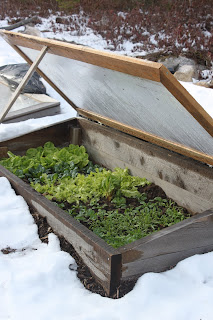
Yet, we took so many great images - the celeriac and carrots covered with leaves and a row cover.. all the cold frames stuffed with vibrant green (and red) veggies.. The kale and greens filled hoop tunnels, the hardy herbs and much more!

I just popped up to the garden to retrieve that celeriac we photographed on Sunday.. once we disturbed its blanket of leaves and snow cover, it started to freeze pretty fast.. So, I just re-dug it up and am going to add it to a big pot of leek soup today (FYI - the recipe is in a MUCH earlier post!) I still have about 6 more celeriac roots buried under the shredded leaves - they are so hardy! Next year, I think I'll plant at least 20. They're so useful - mashed with potatoes, added to soups, sauteed with butter (thanks to Barbara Pleasant - one of my favourite garden writers - for that tip!)
Each day, about 4 to 5 seed catalogues are arriving.. I've placed one order so far, but have plenty more I need (want!).. I'm so lucky to have a few neighbours who like to order with me, so we save on shipping and share packages of things like tomatoes (who needs 40 seeds of each variety?).. it's a great way to budget and still get to enjoy a wide variety of veggies.
My big discovery this year has been just how hardy red salad bowl lettuce is. It's an oakleaf red lettuce and is also extremely cold tolerant. It's always done well for me, but this is the first year that I've played with it in the structures. Not only did it survive in the unprotected garden until early Jan, it's still looking fantastic in the cold frames - not a hint of smut! Amazing.. and a great choice for a year-round veggie garden. Winter Density lettuce is also doing extremely well - it's a cross between a butterhead and a romaine - pretty and delicious.
Well, it's time to organize my seed boxes.. wish me luck!
Happy Gardening!